


















Industrial Switchgear Assembly – Common Mistakes & How to Avoid Them
Assembling industrial switchboards and control panels requires extreme precision and deep knowledge of current engineering standards.
Errors made during assembly can complicate future maintenance, cause power failures, and, in extreme cases, pose serious safety risks. What should you pay special attention to during electrical switchgear installation?
What are the regulations and standards for electrical switchgear?
Compliance requirements for electrical switchboards and panels stem primarily from industrial safety regulations. Depending on the application, the most critical standards include:
- EN / IEC 61439 – Low-voltage switchgear and controlgear assemblies.
- HD 60364 / IEC 60364 – Low-voltage electrical installations in buildings.
- EN / IEC 60204-1 – Safety of machinery – Electrical equipment of machines.
- IEC 60529 – Degrees of protection provided by enclosures (IP Code).
- IEC 62262 – Degrees of protection provided by enclosures against external mechanical impacts (IK Code).
Selecting the appropriate requirements depends on the installation type, the application of the electrical enclosure, and the operating environment.
Electrical switchgears assembly – 6 most common mistakes
A properly built complete electrical panel must ensure not only safe system operation, but also easy access to components and scalability for future expansion. Even minor oversights can significantly hinder servicing.
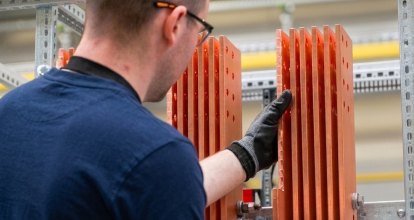
Here are six of the most common errors made during industrial panel wiring and assembly:
1. Insufficient reserve space and spare modules
Selecting an electrical enclosure tailored strictly to current needs is a frequent mistake. Industrial systems are often expanded later with additional circuit breakers, control systems, or extra circuits. An undersized switchboard enclosure will eventually require a complete replacement or the addition of extra junction boxes.
How to avoid it: Always allow for spare space and extra DIN rail modules during the initial design stage. This ensures your pre-wired switchboard remains fully functional as your infrastructure grows.
2. Incorrect cable routing and wire management
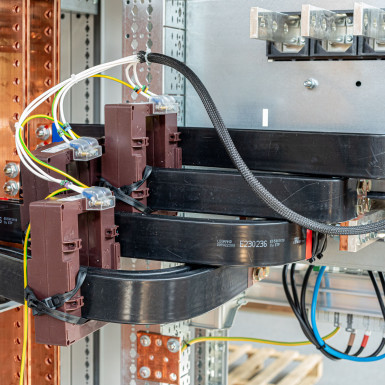
Poor electrical panel wiring creates chaos, makes identifying specific cables difficult, and increases the risk of human error during maintenance.
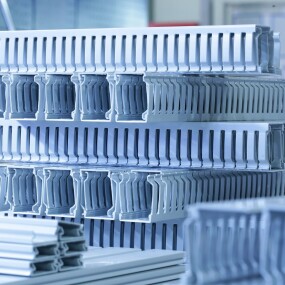
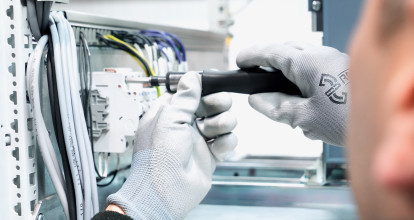
How to wire an electrical panel correctly? Route cables neatly inside designated wiring ducts or looms, keeping them parallel and avoiding unnecessary crossovers. Maintain the correct bend radius for conductors and leave adequate slack for servicing or future modifications.
3. Lack of circuit separation
Bundling power, control, and signal cables together in a single harness causes electromagnetic interference (EMI) and complicates diagnostics. This issue is especially critical in industrial automation systems.
How to avoid it: Separate different circuit groups using internal partitions or terminal strips according to the system's specifications. This applies to both cable tray pathways and the interior layout of the switchgear enclosure.
4. Missing or unclear circuit labeling
Unlabeled wires and components drastically increase troubleshooting time during an emergency, when fast circuit identification is vital.
How to avoid it: Every circuit, wire, and terminal must be clearly and permanently labeled. Additionally, always place an up-to-date electrical schematic diagram inside the panel door pocket.
5. Incorrect terminal torque levels
A loose connection increases contact resistance, leading to overheating, arcing, and component failure. Conversely, over-tightening can strip the terminal or damage the conductor.
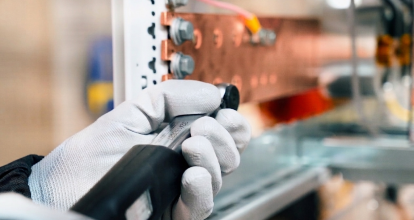
How to avoid it: Tighten all electrical terminals on breakers, contactors, and busbars strictly to the manufacturer’s specified torque settings using a calibrated torque wrench.
6. Skipping pre-commissioning testing and inspection
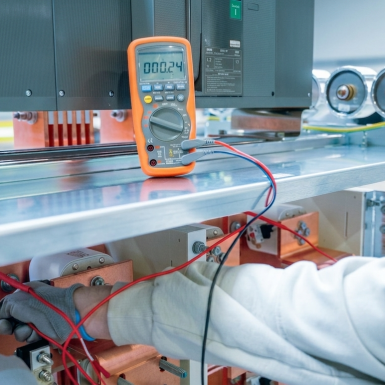
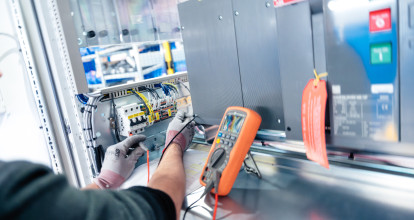
Even a visually complete pre-assembled electrical panel does not guarantee faultless operation. Prior to energization, you must verify connection integrity, wire labeling, protective conductor continuity, insulation resistance, and safety system functions.
How to avoid it: Perform rigorous inspection and testing before applying voltage. Visual checks and measurements allow you to catch errors before normal operations begin.
Electris – comprehensive industrial switchgear assembly
At Electris, we specialize in the custom assembly and prefabrication of electrical switchgears, control panels, and power distribution systems tailored to your plant’s exact operating requirements.
Based on customer documentation, we deliver end-to-end electrical systems integration. Our capabilities span component manufacturing, complete panel integration, and rigorous Factory Acceptance Testing (FAT).
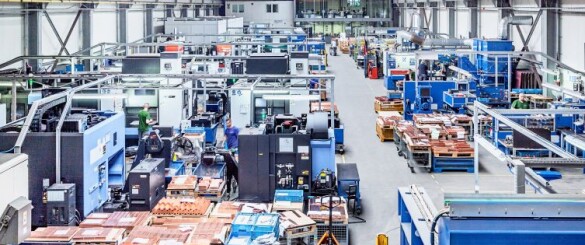
With our own state-of-the-art production infrastructure, we can rapidly implement design modifications (redesign) while maintaining complete independence from external metal enclosure suppliers. We also actively support our clients with design optimization and redesign services—refining electrical cabinet layouts for maximum manufacturing efficiency, performance, and thermal management.
Looking for a reliable partner for your electrical cabinet assembly?
Contact our team at sales@electris.pl.
Sources:
- https://www.jamko.eu/blog/najczestsze-bledy-przy-montazu-rozdzielnic/
- https://jakmet.com.pl/najczestsze-bledy-przy-montazu-rozdzielnic-elektrycznych-i-jak-ich-uniknac/
- https://www.cablotech.com/en/how-to-wire-an-industrial-electrical-panel-a-complete-guide-to-professional-wiring
- https://powerfabric.org/knowledge/panel-installation-best-practices
FAQ – Industrial Switchgear Assembly


We would be happy to
discuss your needs.
Write to us so that we can prepare
a dedicated proposal for you. Ask for a quote.