





Busbars 2.0 – copper engineering for modern power systems and industry

Modern electrical engineering faces unprecedented challenges. Increasing power densities, the ongoing miniaturization of devices, and the necessity of 24/7 reliability mean that traditional approaches to conductive components are no longer sufficient.
At Electris, we are redefining the role of copper. We transform it from a passive raw material into an advanced system component: Busbars 2.0. Discover how advanced electroplating, epoxy insulation, and laminated busbars are enhancing the efficiency of power systems.

Redefining the conductor: why pure copper is no longer enough
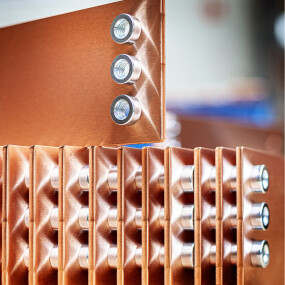
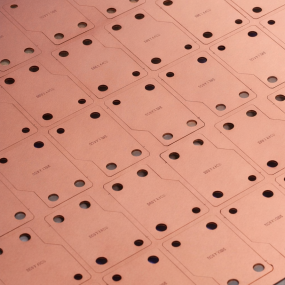
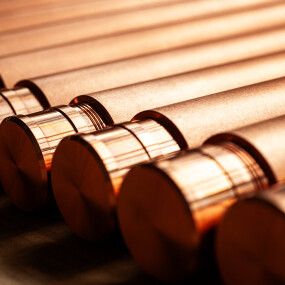
Copper (Cu-ETP and Cu-OF) has been the foundation of the power industry for years due to its excellent specific conductivity. However, in advanced distribution systems, inverters, or energy storage units, the metal itself is only the beginning. True performance depends on how copper interacts with its environment, manages heat, and behaves at contact points.
Every electrical connection is a potential point of failure. For bare copper, the primary threat is the chemical degradation of the surface—oxidation and sulfidation. This process leads to an uncontrolled increase in contact resistance. According to Joule's First Law, increased resistance results in an exponential rise in heat dissipation. This phenomenon triggers thermal degradation of the joint, leading to system instability and, ultimately, costly failures.
At Electris, through advanced surface and structural engineering, we transform copper into an active component that tangibly improves the efficiency and lifespan of the entire system. How do we achieve this?

1. Surface engineering and advanced electroplating
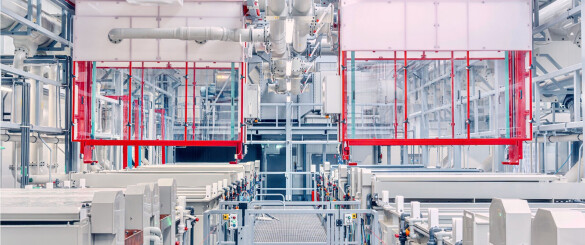
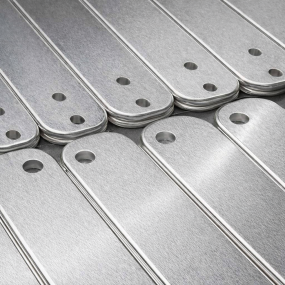
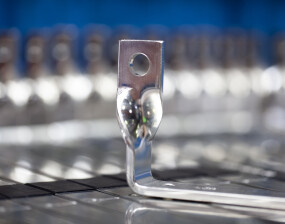
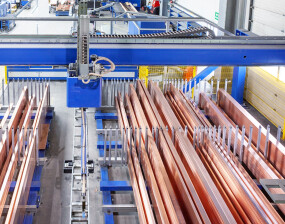
The weakest link in any electrical system is the contact point. This is where copper oxidation and dangerous overheating occur. Electris operates an automated, high-precision electroplating line. Through the plating processes we apply to copper or aluminum components, we can precisely manage the physicochemical properties of the surface:
- galvanic silver plating: The gold standard for high-current applications. Silver features the lowest contact resistance and excellent sliding properties. We apply it where minimizing power losses and operating under variable loads are critical.
- tin plating: An ideal solution for protection against atmospheric and chemical corrosion. It also provides excellent solderability, which is essential in many power electronics applications.
- nickel plating: Used as a hard undercoat or a final layer in applications requiring wear resistance. Crucially, nickel acts as a diffusion barrier, preventing the migration of copper atoms into subsequent, more noble coating layers.
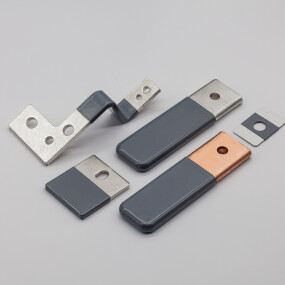
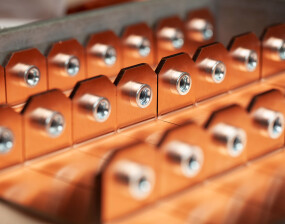
A unique advantage of Electris is the ability to perform selective plating and combine different metals (e.g., silver and tin) on a single component. Thanks to advanced masking techniques, we can silver-plate only the key contact points, leaving the rest of the busbar tinned or insulated. This is a cost-optimization strategy that goes hand-in-hand with peak technical quality.
2. Polymer and epoxy coatings – integral dielectric insulation
In modern control cabinets, the battle is fought over every cubic centimeter. The main barrier to the miniaturization of switchgear is the need to maintain rigorous insulation distances—both clearance and creepage distances. Traditional insulation methods (such as heat-shrink tubing) limit engineers' maneuverability due to their thickness and the difficulty of application on complex shapes.
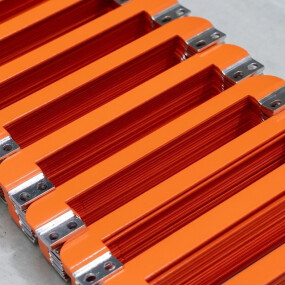
Electris, through the precise powder application of epoxy or polyester resins, creates a seamless, uniform dielectric layer with strictly controlled thickness on the copper surface. This service revolutionizes power system design by providing:
- Reduced Dimensions and Mass: High-strength insulation (up to 45 kV/mm) allows potentials to be placed in maximum proximity. Consequently, designers can reduce the size of enclosures and cabinets, saving space in production halls or containers.
- Safety in Harsh Environments: The sealed polymer barrier eliminates risks associated with moisture condensation and the deposition of conductive contaminants. This increases resistance to partial discharge, which is vital for medium and high-voltage systems.
- Assembly Cost-Efficiency: Eliminating additional insulators means fewer components in the cabinet, simplified logistics, and shorter installation times.
3. Laminated busbars – field engineering
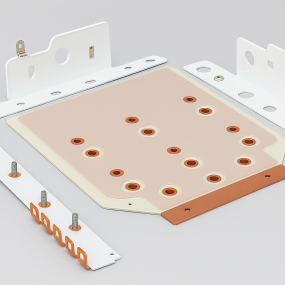
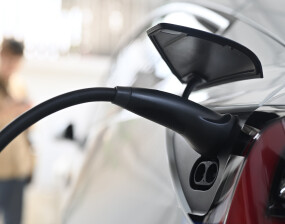
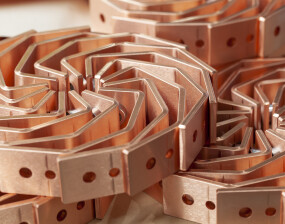
For the most demanding applications, such as high-power electronics, EV charging systems, or wind turbines, we offer laminated busbars. These are multi-layer "sandwiches" where flat conductors carrying currents in opposite directions are separated by a thin layer of high-quality dielectric (e.g., Nomex®, Mylar®).
This structure geometrically resembles a flat capacitor and acts as a transmission line with ultra-low characteristic impedance. The magnetic fields generated by currents in adjacent layers cancel each other out. The result is a reduction in parasitic inductance, often by more than an order of magnitude compared to cable connections. This allows for faster switching of transistors (IGBT/SiC), increasing overall system efficiency and reducing EMI/EMC interference.

Why partner with electris?
Choosing Busbars 2.0 technology is a strategic business decision that minimizes risk and maximizes our clients' profits.
- Energy savings: reduction of losses by 2-3% compared to cable systems.
- Reduced installation costs: assembly is 30-50% faster thanks to modularity.
- Lower operating costs: durable construction means less frequent maintenance.
- Increased power density: ability to build smaller and lighter systems.
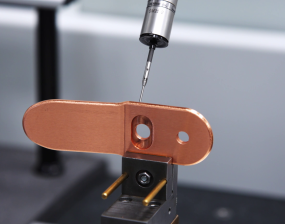
- Dielectric safety: insulation continuity confirmed by high-voltage testing.
- Environmental resistance: corrosion protection in aggressive environments.
- Mechanical stability: high resistance to deformation and vibration.
- Noise suppression: faster emc certification for the end device.
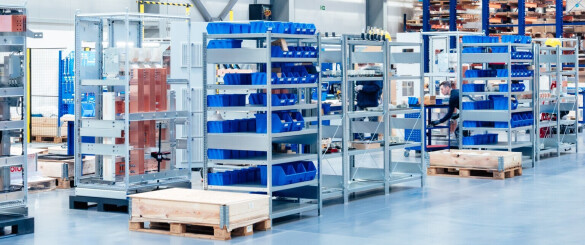
- Simplified logistics: all processes in one place – the one-stop-shop model.
- Compliance and certification: full compliance with ISO 9001, REACH, AND ROHS.

Busbars 2.0: partnership in the era of Industry 4.0
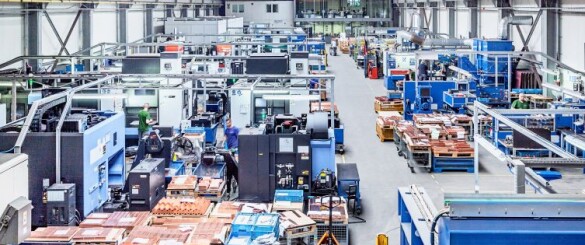
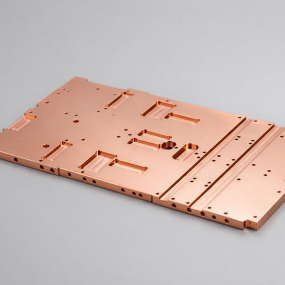
The Busbars 2.0 concept is our response to the challenges of the modern economy. By combining advanced mechanical copper processing, electrochemistry, and materials engineering in a single production facility, we deliver ready-to-assemble solutions. For our clients, this means a shorter supply chain, lower logistical risk, and guaranteed quality at every stage—from the raw flat bar to the final component.
If your project requires components with custom parameters, please consult with us. Contact us at: sales@electris.pl.
FAQ – Redefining the Conductor: Why Pure Copper Is Not Enough


We would be happy to
discuss your needs.
Write to us so that we can prepare
a dedicated proposal for you. Ask for a quote.


